Embedded Dirt & Tracked-In Soil
Grit walked in off a Seattle sidewalk works down past the tips of the pile and sits at the base of the fibers, where a vacuum head has limited reach and abrasion quietly continues.
Cleaning From The Heart provides carpet cleaning in Seattle for commercial properties and homes. We lift embedded dirt, tracked-in soil, spots, and stale carpet odors from offices, common areas, rental units, and living spaces, then hand the room back with clear aftercare. Every job is scoped to the carpet in front of us rather than a fixed package.
Vacuuming lifts what is sitting on top of the pile. What stays behind is the grit walked down to the base of the fiber, the residue from old spills, and the soil loading in the walkways. That is what makes a floor read dull and worn long before the carpet is genuinely worn out.
Vacuuming does the job it was designed for: removing loose, dry soil from the surface of the pile. It was never going to reach what is bonded to the fiber further down: the fine grit tracked in off wet Seattle sidewalks, the residue left where a spill was blotted, the film that builds gradually across a walkway. Extraction cleaning is what addresses that layer, which is why a carpet that gets vacuumed every night can still look tired.
A professional carpet cleaning does two things at once. It improves appearance now, and it removes the abrasive soil that grinds against the fiber every time someone walks across it. Keeping that soil load down is the most practical thing anyone can do for carpet lifespan, and it is a great deal cheaper than premature replacement.
There is no single correct method or scope. Carpet condition, fiber, soil level, and how the building is used all change what is appropriate, and a commercial floor adds a scheduling problem on top: the work has to fit into a window that does not disrupt the people using the space. That is why every job starts with an assessment rather than a price list.
Most calls come down to one of these. Knowing which one you are dealing with is what decides the approach and the realistic outcome.
Grit walked in off a Seattle sidewalk works down past the tips of the pile and sits at the base of the fibers, where a vacuum head has limited reach and abrasion quietly continues.
Coffee at a desk, a spill in a break room, something dropped in a hallway. Left alone, spots set into the fiber, and older marks respond differently than fresh ones.
Entrances, corridors, the path between a desk and a printer. Traffic lanes darken and flatten first, which is why a room can look tired while the edges still look fine.
Damp shoes, spills that soaked in, or a unit left closed up between tenants. Odor sits in the fiber and pad, and surface freshening rarely holds for long.
Crushed pile and soil loading scatter light differently, so carpet reads grey and worn even where the fiber itself still has plenty of life in it.
A vacated unit shows every mark the furniture was hiding. Turnover carpet cleaning is usually about presentation and inspection readiness on a tight schedule.
Facilities that vacuum nightly but have not had extraction cleaning in years accumulate soil evenly across the floor, so the decline is gradual and easy to miss.
Carpet cleaned only when it looks bad is always being rescued. A planned interval keeps the appearance steadier and the work smaller each time.
Cleaning addresses soil. It does not reverse fiber damage, dye loss, or wear, and we will tell you which one you are looking at before any work is booked.
The three stages below are the order a carpet job actually runs in. Tasks are performed according to the approved scope, so your project may include everything here or a focused subset.
The walkthrough decides the rest of the job. We look at what the carpet actually is, how heavily it is soiled, which marks are likely to respond and which may not, and how we get in and out of the building without disrupting whoever is using it.
Final scope depends on carpet type and condition, site access, and the service you select. Upholstery, rug work off site, hard-floor restoration, and subfloor or pad issues are quoted separately rather than assumed inside a carpet cleaning.
Commercial carpet takes more traffic in a week than most household carpet takes in a year, and it takes it in the same narrow lanes every day. Office carpet cleaning in Seattle is largely a question of managing that: keeping walkways, entries, and shared areas from becoming the part of the building everyone notices.
The other half of the job is access. Work is planned around your operation rather than dropped into the middle of it, which usually means an evening, a weekend, or a phased approach where one zone is out of service at a time. In property-managed buildings that also means coordinating notice so tenants and residents are not surprised by equipment in the corridor.
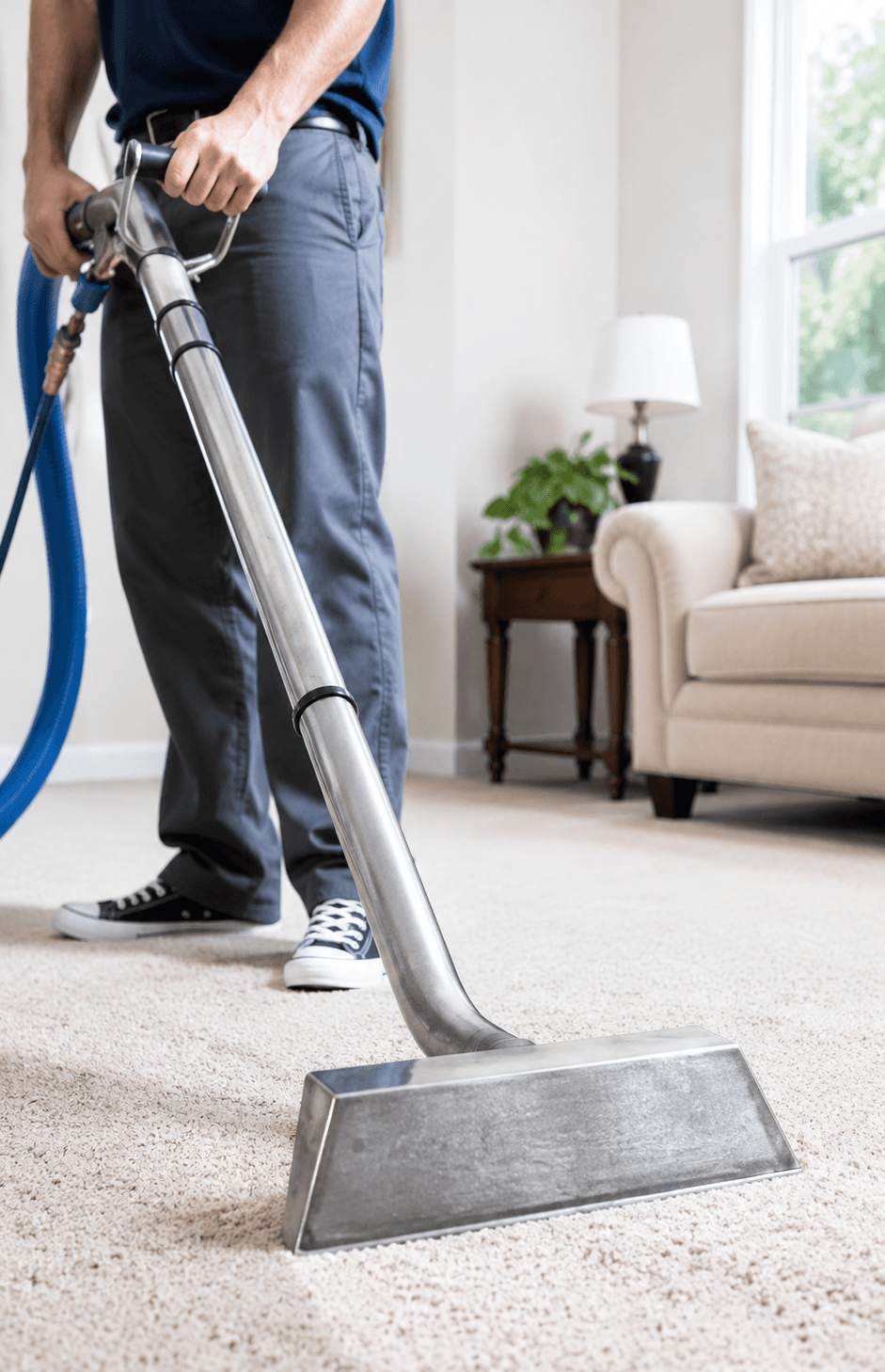
Evenings, weekends, and quiet periods are the norm for occupied buildings. Larger floors are split into zones so one area is out of use at a time rather than the whole space.
Common areas, corridors, and unit carpet across a portfolio, coordinated so tenants get notice. Turnover work is scheduled against your leasing dates rather than ours.
High-traffic facilities benefit from a set interval with traffic lanes handled more often than the full floor. The interval is agreed from how the building is actually used.
Carpet that has gone years without extraction is a bigger job than a maintenance visit, and it is quoted that way. We will tell you honestly what a single visit can and cannot recover.
Nightly vacuuming, decent entry matting, and prompt attention to fresh spills do more for commercial carpet than any single extraction visit. Carpet work sits naturally inside a commercial cleaning plan, where the day-to-day routine is protecting the carpet between visits rather than working against it.
Home carpet cleaning is usually about a handful of specific rooms rather than a whole floor plan. Living areas that take daily use, bedrooms that have never been done, a hallway that shows the route everyone walks, or stairs that carry the most concentrated wear in the house.
We work in houses, apartments, condos, and townhomes across the Seattle area, on one-time visits and at move-in and move-out. Households with pets and young children tend to book more often, and that is a reasonable read because those homes accumulate spots and soil faster than the vacuum can keep up with.
Booking a whole-home reset? Carpet work pairs naturally with residential deep cleaning and with move-in and move-out cleaning on the same visit.

Floor plans, traffic, and available access windows differ enough between these that scope and scheduling are written per property.
Carpet in a lobby, a classroom, a hotel corridor, and a bedroom all wear differently and all get different attention. If your property is not on this list, it is worth asking rather than assuming.
From the first call to a finished floor and a maintenance recommendation. Scope, timing, and cost are settled before anyone opens a piece of equipment.
Tell us the property type, roughly how much carpeted area is involved, which rooms matter most, and whether this is one-time or recurring.
We look at soil level, traffic lanes, visible spots, carpet condition, furniture, and access, and flag anything that may not fully respond.
Areas are prepared and protected, dry soil is lifted where pre-vacuuming is in scope, and targeted treatment is applied where it is needed.
Extraction cleaning across the agreed areas, with additional attention on entrances, walkways, and the zones that take the most use.
We check the treated areas, walk the space with you, and hand over drying, access, and maintenance guidance before we leave.
Spot work is the part of carpet cleaning where promises get made that nobody can keep. A stain is not one problem with one solution. What caused it, how long it has been sitting, what the carpet is made of, and what has already been applied to it all pull the outcome in different directions.
So we treat spots individually, use pre-treatment where it earns its place, and tell you what we expect before we start. Some marks disappear. Some improve enough that you stop noticing them. A few are permanent, and you deserve to know which is which while you are still deciding whether the job is worth booking.
Both are normal, and one does not commit you to the other. The difference is whether you are fixing a condition or preventing one.
A standalone visit, usually driven by a date on a calendar or carpet that has visibly drifted past acceptable.
A set interval agreed from how the building is actually used, so carpet is maintained rather than rescued.
We do not publish fixed intervals or package prices. How often carpet should be cleaned depends on the traffic it takes, the entry matting in place, and the standard the space is held to. All of that is worked out per property.
Carpet rarely announces that it is due. It fades gradually, and the people in the building every day are the last to notice. These are the practical signals worth acting on.
If two or three of them apply, it is worth a call. Cleaning carpet before the soil load gets heavy is a smaller job than restoring it afterwards.
Locally owned and family-operated, not a franchise with a Seattle phone number.
Room count, soil level, traffic lanes, spots, stairs, and furniture all change the job. The scope is written from what is actually there rather than a standard package applied to every floor.
Offices, common areas, schools, and portfolios of managed buildings are a large part of what we do, so access planning, tenant notice, and out-of-hours windows are normal rather than exceptional.
The walkways are what people actually see. Entrances, corridors, and heavily used zones get additional attention instead of the same single pass as a quiet corner of a room.
If a stain is unlikely to come out, we say so before the work rather than after it. Setting the expectation correctly is worth more than a promise nobody can keep.
Book a single visit with no commitment, or set an interval that keeps the carpet steady. Both are quoted the same way and neither one requires the other.
Carpet work sits alongside janitorial, deep cleaning, floor care, and window cleaning, so a whole property can run on one scope and one point of contact.
Seattle is where most of our carpet work happens, from downtown office floors and South Lake Union workspaces to houses and rentals in the north-end and south-end neighborhoods. Access shapes the job as much as the carpet does. A tower suite, a walk-up apartment building, and a single-family home each need a different plan for parking, equipment, and timing, and all of that is worked out before the visit rather than on the day.
Not on the list? Send us the address and we will confirm availability before quoting.
None of this is heavy lifting. It is the handful of things that let the crew start immediately and give the carpet the best chance of drying well.
Walk us to the marks that bother you most and tell us what caused them if you know. It changes how they are treated and how honestly we can set expectations.
Floor lamps, plant pots, toys, cables, and anything breakable are best moved off the carpet beforehand so nothing has to be worked around or set aside.
Tell us what you want moved before the visit. Some pieces we can move and return, heavy or delicate items are usually worked around, and both get written into the scope.
Doors open, equipment runs, and floors stay damp for a while. A closed room or a few hours elsewhere keeps pets comfortable and out of the work area.
Entry codes, alarm routines, loading zones, elevator bookings, and where the crew can park. In managed buildings this is usually the part that needs the most lead time.
Keep cleaned areas clear, avoid walking through in outdoor shoes, and follow whatever airflow guidance we leave. Most disappointing results trace back to this window.
Carpet cleaning is quoted per property rather than from a published per-room rate, because two floors of the same size are often completely different jobs. A lightly used office cleaned last year and a rental unit that has not been touched in five take very different amounts of work to bring back.
We would rather look first and quote accurately than publish a starting price that changes the moment we walk in. The factors on the right are what move the number.
What facility managers, property managers, and homeowners ask us most before booking carpet cleaning in Seattle.
Not sure what your carpet needs?
Send a photo of the room and the spots you are worried about and we'll tell you plainly what we think is realistic.
A visit normally runs in three stages. First an assessment of carpet condition, soil level, traffic lanes, and visible spots, along with access and furniture decisions. Then the cleaning itself: pre-vacuuming where it is in scope, targeted pre-treatment, individual spot treatment, and deep extraction cleaning with extra attention on entrances and walkways. Finally a check of the treated areas, a walkthrough with you, and drying and aftercare guidance. The exact scope is confirmed in writing before we start.
Yes. Commercial carpet cleaning is a core part of what we do, covering offices, lobbies, corridors, conference rooms, break rooms, and shared common areas. Work is normally scheduled for evenings, weekends, or quiet periods so the space stays usable, and larger floors are split into zones rather than closing everything at once. Both one-time restorative projects and recurring carpet maintenance are available, with the interval set from how the building is actually used.
Yes to both. Offices, workstation areas, meeting rooms, and reception spaces are regular work, as are the lobbies, corridors, laundry rooms, and common areas of apartment buildings and condominiums. For managed properties we coordinate scheduling so residents and tenants get notice, and unit carpet is commonly handled at turnover alongside the rest of the make-ready work.
Yes. Spots are treated individually rather than with one product across the whole floor, because a drink spill, an oily mark, and a dye-based stain each behave differently. Traffic lanes, entrances, and heavily used walkways get targeted pre-treatment and additional cleaning passes, since those areas hold far more soil than the quiet parts of a room. What we expect to improve is discussed with you during the assessment.
No, and anyone promising otherwise is guessing. Results depend on what caused the mark, how long it has been there, the carpet fiber, and what was used on it before we arrived. Many spots improve substantially or disappear. Others, particularly bleaching, dye loss, and heavy wear, are damage to the fiber rather than soil sitting on it, and cleaning does not reverse that. We flag the likely outcomes before starting, not afterwards.
Odor is discussed at the assessment and treatment can be included in the written scope. How much improves depends on the source and how deep it has gone: something on the surface of the fiber responds far better than a spill that reached the backing or the pad underneath. Where the source sits below the carpet, cleaning the carpet alone will not resolve it, and we will say so rather than repeat the visit.
It varies, and a fixed number would be misleading. Drying depends on the cleaning approach used, the carpet type and pile depth, how heavily soiled it was, airflow through the space, temperature, and humidity, which in Seattle changes a great deal between a dry summer week and a wet November. We give you realistic guidance for your specific space at the walkthrough and suggest how to help it along with ventilation and airflow.
Some of it, and it is agreed before the visit rather than improvised on the day. Small items, floor lamps, plant pots, cables, and anything fragile are best cleared beforehand. Movable furniture can often be shifted and returned as part of the job, while heavy, fixed, delicate, or electronic items are normally worked around. Whatever is decided is written into the scope so there are no surprises.
Yes. A single visit with no ongoing commitment is completely normal for move-ins and move-outs, tenant turnovers, a seasonal reset, preparing a property for sale or inspection, or simply carpet that has drifted past acceptable. One-time work is quoted the same way as recurring service, and choosing it does not commit you to anything afterwards.
Yes, and for high-traffic buildings it is usually the cheaper approach over time. A recurring plan sets an interval per area rather than per building, so entrances and corridors can be handled more frequently than quieter rooms. It can run on its own or sit inside a wider commercial cleaning plan, where daily vacuuming and entry matting are actually protecting the carpet between visits.
Total carpeted area and how it divides into rooms, the property type, carpet condition and how long since it was last cleaned, overall soil level, the number and severity of spots, stairs and hand-worked areas, how much furniture has to be moved, access and parking, whether the work is after hours, and whether it is a one-time visit or a recurring interval. We quote from the walkthrough rather than a published rate, because two floors of the same size are often very different jobs.
Yes. Turnover carpet cleaning is common work for us across rentals, condos, apartments, and commercial suites, and it usually runs to a fixed date. An empty unit is also the easiest carpet to clean well, since there is no furniture to work around and the whole floor is accessible. It pairs naturally with move-in and move-out cleaning when the whole unit needs to be inspection-ready.
We work throughout Seattle, including Downtown, Belltown, South Lake Union, Capitol Hill, Queen Anne, Ballard, Fremont, Wallingford, Green Lake, the University District, Beacon Hill, Columbia City, West Seattle, Georgetown, and SODO. Outside the city we serve Renton, Bellevue, Kent, Everett, Tukwila, Shoreline, Federal Way, Kirkland, Bothell, Mill Creek, Tacoma, and the surrounding communities. Tell us the address and we will confirm availability.
Use the quote form or call (206) 850-8484. It helps to have the property type, roughly how much carpeted area is involved, which rooms matter most, any spots or odors you want looked at, your preferred timing, and whether you want one-time or recurring service. For commercial properties we usually follow up with a walkthrough before putting the scope and price in writing. There is no obligation attached.
The recurring janitorial plan that keeps carpet protected between extraction visits.
View commercial cleaningWhole-home cleaning for houses, apartments, and condos across the Seattle area.
See residential cleaningTurnover cleaning for rentals and commercial suites, commonly booked with carpet work.
Explore turnover cleaningA one-time detailed reset of a facility, often scheduled alongside carpet extraction.
View commercial deep cleaningDetailed top-to-bottom home cleaning for move-ins, move-outs, and seasonal resets.
See residential deep cleaningHard-floor restoration for the VCT, vinyl, and tile areas either side of your carpet.
Explore strip and waxCampus cleaning plans with classroom and office carpet extraction scheduled into breaks.
See school cleaningFront-of-house cleaning for dining rooms, including carpeted seating and private areas.
View restaurant cleaningReal photos from Seattle-area jobs, filterable by the type of cleaning work.
Browse our resultsCarpet Cleaning in Seattle
Tell us the property type, roughly how much carpeted area is involved, any spots or odors you want looked at, when you would like the work done, and whether you need a one-time visit or a recurring schedule. We will come back with a scope and a price, and nothing is committed until you say so.
Serving Seattle, Renton, Bellevue, Kent, Everett & Surrounding Areas