Cleaning From The Heart LLC
Seattle Solar Panel Cleaning

Solar Panel Cleaning Services in Seattle

Panel cleaning for homes, businesses and managed properties across Seattle. We clear pollen, dust, bird droppings, leaves, needles and dried outdoor residue off panel surfaces using methods matched to the glass in front of us, on rooftop and accessible ground-mounted arrays, with access and safety confirmed before anything is booked.

Locally owned and family-operated · Free quotes · Mon-Sat: 7 AM - 7 PM

The Common Problem

Panels sit where nobody looks. Pollen settles across the glass in spring, birds treat the array as the best perch on the property, and needles, leaves and tree debris collect along the bottom edge through autumn. It builds gradually enough that most owners only notice from a ladder or a neighbor's upstairs window.

How We Help

We assess the system, the buildup and the access first, then clean the panel surfaces carefully and clear the debris caught around them, so the array is maintained the same way the rest of the property's exterior is, rather than left to whatever the weather does.

  • Rooftop and accessible ground-mounted arrays
  • Homes, businesses and managed properties
  • Access and safety confirmed before we book
  • One-time cleaning or a repeating schedule
Homes, businesses & managed properties
Free quote before anything is booked
One-time or seasonal scheduling
Direct line to the owner
What This Service Is

Professional Solar Panel Cleaning in Seattle, WA

Cleaning From The Heart LLC cleans solar panels for homeowners, business owners and property managers throughout Seattle. The work is exterior surface cleaning: pollen, dust, bird droppings, leaves, evergreen needles, tree residue, cobwebs and the dried outdoor film that collects on panel glass and along frame edges over a season.

Panels here get dirty for reasons that are specific to this city rather than universal. Seattle properties sit under mature firs, cedars and street trees, which means needles, leaves and sap land on roofs all year. Spring brings a pollen load heavy enough to coat every outdoor surface at once. Rooftop arrays are the highest perch on most properties, so bird activity concentrates there. And the long damp stretches from October onward keep panels wet for days, so dust that lands sticks instead of blowing away.

Rain does real work on all of that, and we are not going to pretend otherwise. It rinses loose dust and light particles off the glass continuously through the wet season. What it does not do is remove material that has bonded to the surface. Droppings, sap, sticky pollen, mineral spotting and organic residue survive rainfall that carries ordinary dirt straight off, and on low-pitch panels where water pools and evaporates, rain can leave spotting behind rather than take it away.

That is the gap this service fills. Not every array needs cleaning on a fixed schedule, and any company telling you otherwise before looking at your property is guessing. What we do is assess the system, tell you what is actually on it, and clean what can be reached safely.
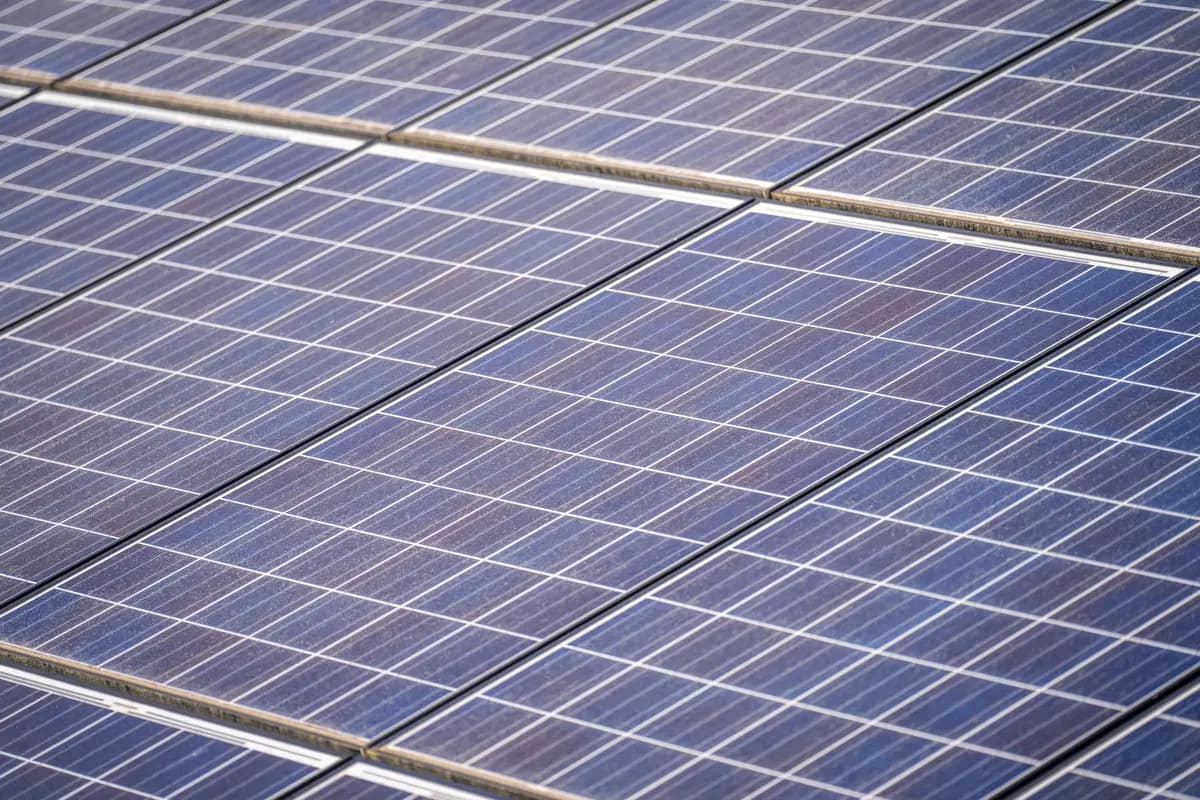
Close-up of photovoltaic panel glass showing a dulled film across the cell surface
Reference image. Surface film spreads evenly across panel glass, which is why it is difficult to judge from the ground.
Local Conditions

What Builds Up on Solar Panels in Seattle?

Almost all of it is ordinary outdoor material, and almost all of it arrives from something growing, flying or driving nearby. Which of these dominates at your property depends far more on what is directly around the roof than on anything about the panels themselves.

Common Seattle panel buildup

  • Pollen
  • Bird droppings
  • Fir & cedar needles
  • Leaves
  • Dust & road film
  • Tree sap
  • Water spotting
  • Cobwebs
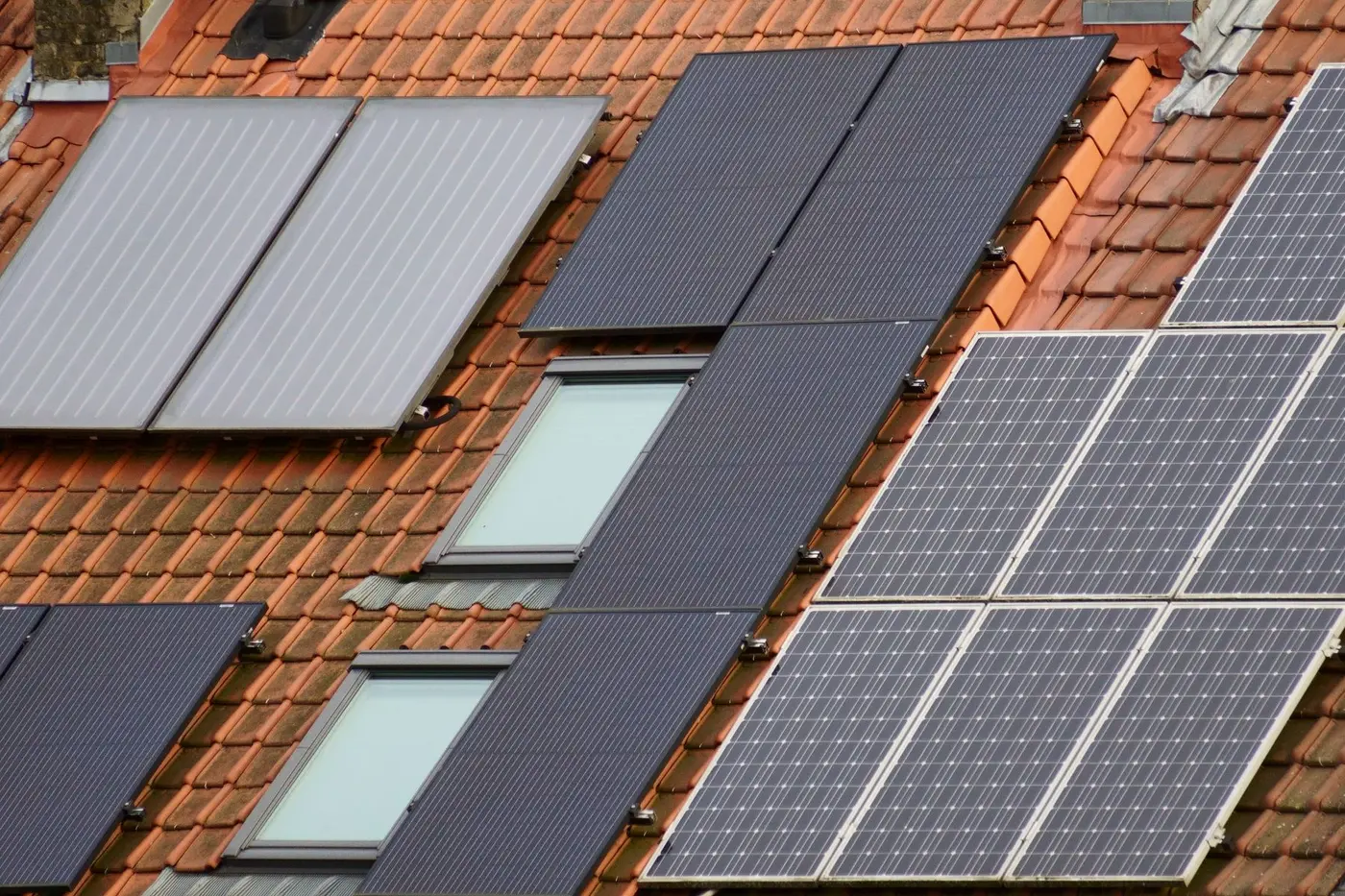
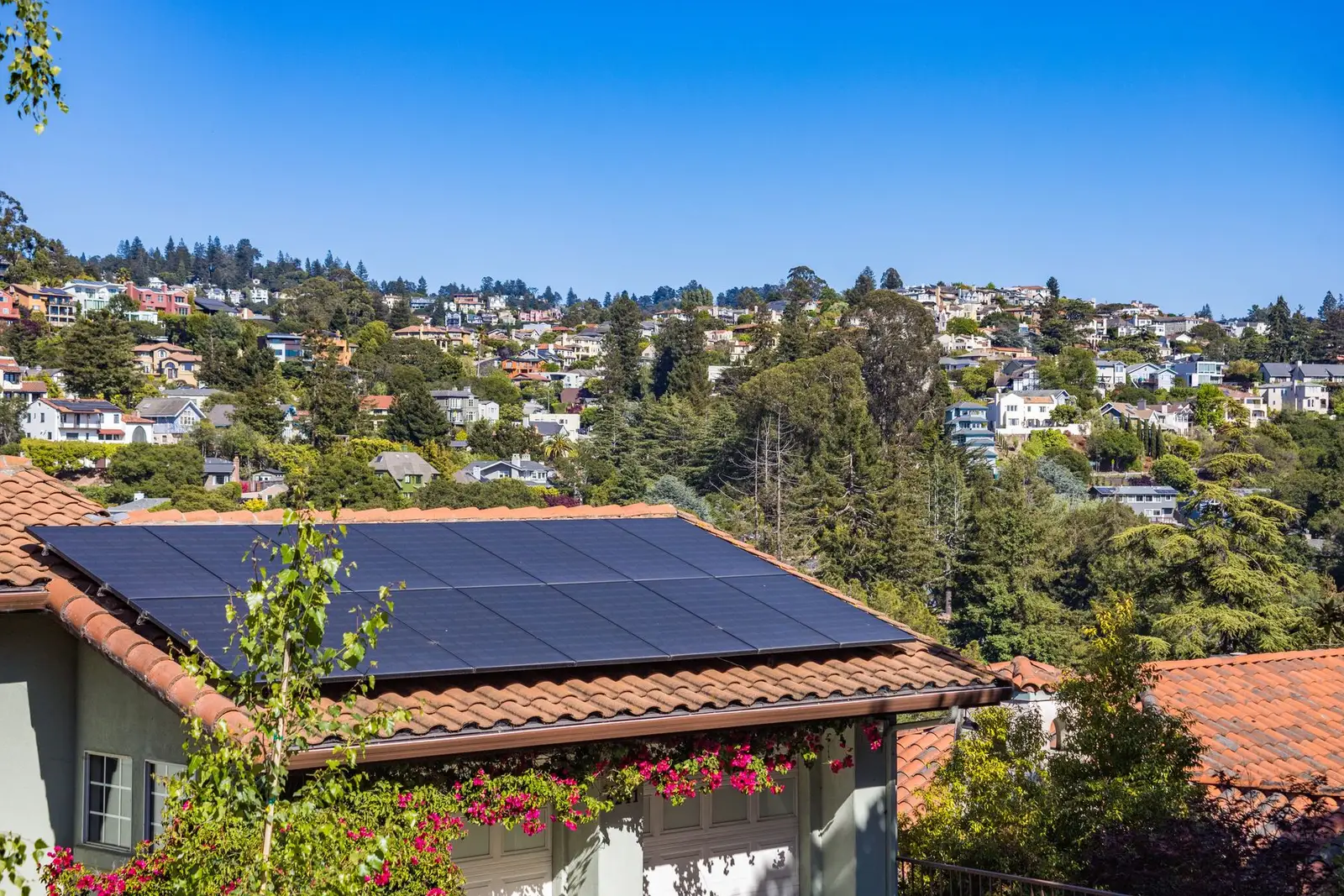
Rooftop solar panels installed across a tiled roof beside skylights
Reference image. Panel edges, frame rails and the tile courses beside them are where debris collects first.

Seasonal Pollen

From late winter through early summer, alder, birch, cedar and grass pollen settles on everything outdoors. On panel glass it dries into a fine yellow-green film that spreads evenly rather than in patches, which is exactly why it is easy to miss from the ground.

Bird Droppings

Panels sit on the highest, warmest surface on a property, so gulls, crows and pigeons use them. Droppings dry quickly, bond hard to the glass, and are one of the few kinds of soiling a whole winter of rain will not reliably lift.

Leaves & Evergreen Debris

Fir and cedar needles are the local specialty. They slide down a sloped array and pack into the bottom edge, along frame rails and under the panel lip, where they hold moisture against the frame and start breaking down.

Dust & Airborne Dirt

Road grit, brake dust, landscaping soil and construction dust travel further than most people expect. Properties near arterials, active building sites or gravel driveways collect a noticeably grubbier film than a quiet residential block does.

Tree Sap & Organic Residue

A conifer directly above an array drops more than needles. Sap and resin land as small sticky spots that catch dust and hold onto it, and they stay put through weather that would rinse ordinary dirt straight off.

Water Spotting & Dried Residue

Rain and sprinkler overspray both carry dissolved minerals. Where water sits on glass and evaporates instead of running off, it leaves rings and a dulled haze behind, most visibly on low-pitch panels where runoff is slow.

Cobwebs & Light Organic Buildup

Webbing gathers along frame edges, in corners and around mounting hardware, then traps needles and dust. In damp, shaded positions a thin organic film can develop on frames and the roof surfaces around a system as well.

Damp-Weather Grime

Long wet spells keep panels damp for days at a time. Dust that lands on a wet surface sticks instead of blowing off, so a grey film builds through autumn and winter that a dry-climate property never accumulates.

The Question Everyone Asks

Does Seattle Rain Clean Solar Panels?

Partly, and more than it would in most of the country. A city that gets rain this consistently does keep loose dust and light surface particles moving off panel glass without anyone doing anything. Panels in Seattle genuinely do not develop the thick dust crust that arrays in dry, dusty regions build up between storms.

The limitation is what rain cannot shift. Water running down a sloped surface lifts what is sitting loose on top of it. It does not lift material that has bonded to the glass, and that covers most of the things people actually call about.

  • Bird droppings
  • Tree sap and resin spotting
  • Sticky, dried-on pollen
  • Dried organic residue
  • Compacted dirt in frame channels
  • Mineral spotting from evaporation

How much rain helps also depends on the system. A steeply pitched array sheds water fast and stays cleaner than a shallow one where water pools and evaporates in place. A panel under a fir catches debris faster than rain can carry it off. An exposed array on an open roof does better than one tucked beside a chimney or a parapet where runoff slows and dirt collects.

On production claims, plainly

Keeping panel surfaces free of heavy buildup means dirt is not unnecessarily obstructing the glass. We will not attach a percentage to that. Actual electricity production depends on system design, panel orientation, shading, weather, seasonal daylight and equipment condition, and anyone promising you a specific efficiency gain from a wash is selling rather than explaining.

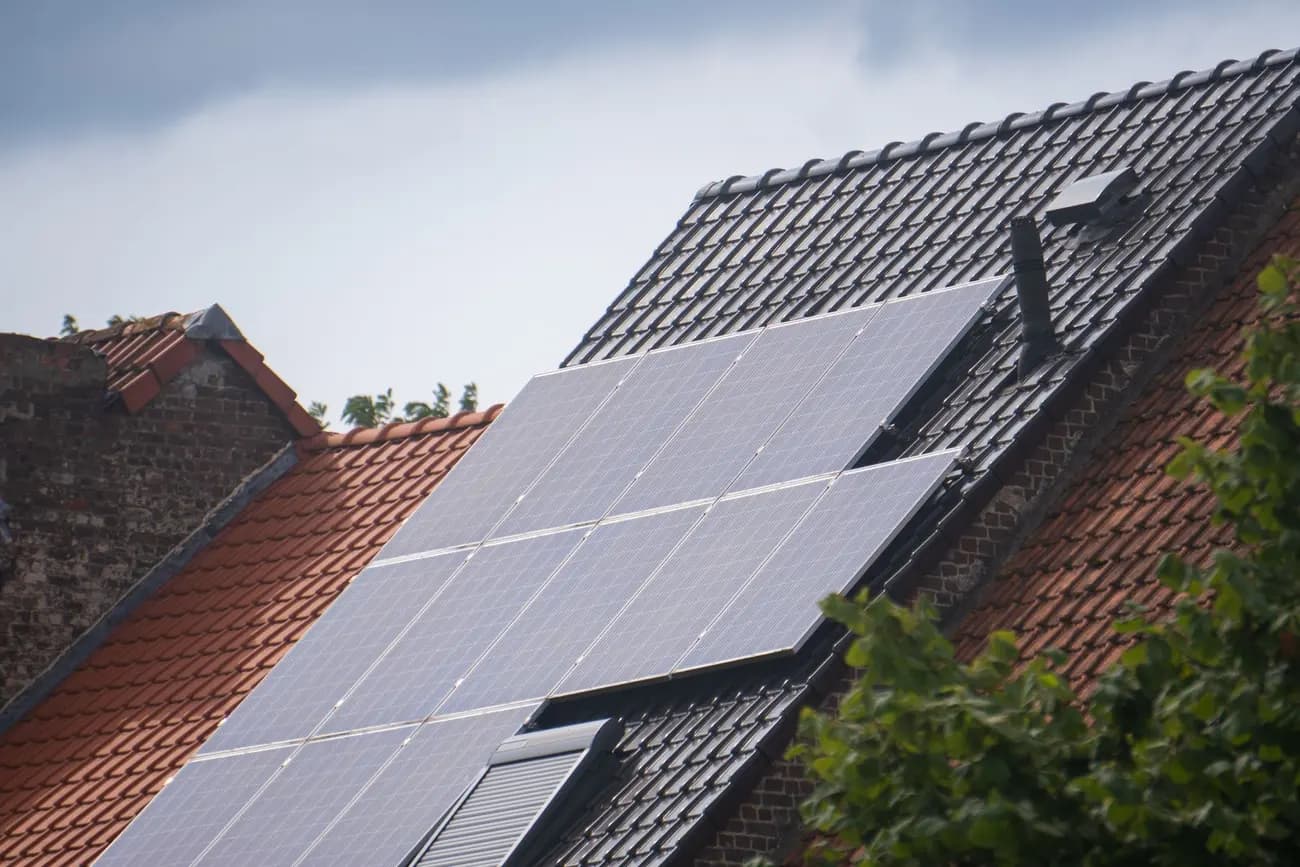
Solar panels on a residential roof under a grey overcast sky
Reference image. Overcast, damp conditions keep panels wet for long stretches, which changes how dirt behaves on the glass.
Residential

Residential Solar Panel Cleaning in Seattle

Most residential calls follow the same pattern. A homeowner notices the array looks dull from an upstairs window, or spots droppings that have been there since summer, or has just had the gutters done and been told there are needles packed along the bottom row of panels. Roof-mounted arrays on single-family homes are the bulk of this work, along with garage and carport mounts, panels on detached structures and accessory dwellings, and ground-mounted arrays that can be reached safely from level ground.

Access is assessed before anything is confirmed. Roof pitch, the condition of the roof surface itself, where the array sits relative to the eaves, and whether the panels can be worked without anyone standing on them all shape what we quote. If part of a system is not safely reachable at your property, you will be told that up front rather than discovering it in an invoice.

  • Single-family homes with roof-mounted arrays
  • Townhomes and attached homes where access is suitable
  • Garage, carport and detached-structure arrays
  • Accessory dwelling units and workshops
  • Accessible ground-mounted panels in a yard
  • Homes being prepared for sale or handover
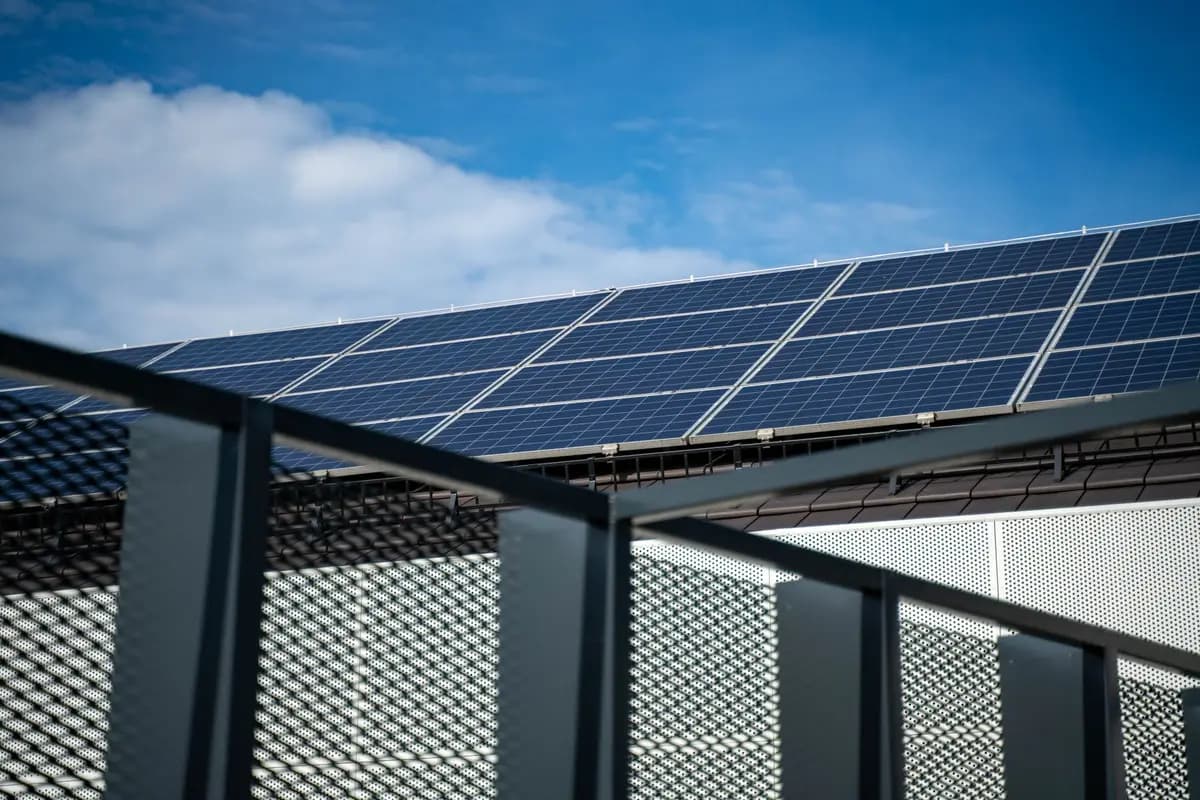
Angled solar panel array mounted on a residential roof against a partly cloudy sky
Reference image. Panel angle changes how much water and debris a roof array sheds on its own.

Tree Cover Over the Roof

Seattle is a city of mature conifers and street trees. Needles, leaves, sap and shade all arrive with them, and a house with a fir on the south side collects far more on its panels than a neighbor two doors down.

Regular Bird Activity

Roof-mounted arrays attract perching. Where droppings collect in the same few spots visit after visit, they are usually the reason a homeowner starts looking for a cleaner in the first place.

Spring Pollen Season

The pollen film that coats cars, windows and patio furniture lands on panel glass at exactly the same time, and it is the single most common trigger for a spring booking.

Seasonal Exterior Upkeep

Plenty of homeowners simply add the array to the same visit as the windows or a driveway wash, so the whole exterior gets dealt with in one appointment rather than three.

Commercial

Commercial Solar Panel Cleaning in Seattle

On the commercial side the driver is usually appearance and routine upkeep rather than a single visible problem. A building with a visible array wants it looking maintained, and a facility or property manager running an exterior maintenance calendar wants the panels on it alongside the glass, the walkways and the parking areas rather than sitting outside every schedule.

Larger systems are quoted on panel count, row layout and the area that can be worked safely, and scheduled around how the property actually runs: outside trading hours for retail, around term dates for schools, around services for places of worship, and through the property manager for multifamily buildings. Existing roof access rules, permits and site inductions are followed, not worked around. Very large ground-based solar farms are outside what we take on.

Where a property already has a Seattle commercial cleaning schedule with us, panel cleaning folds into the same calendar, as does commercial window cleaning. Managed portfolios are handled the same way as the rest of the exterior work in our property management cleaning programs.

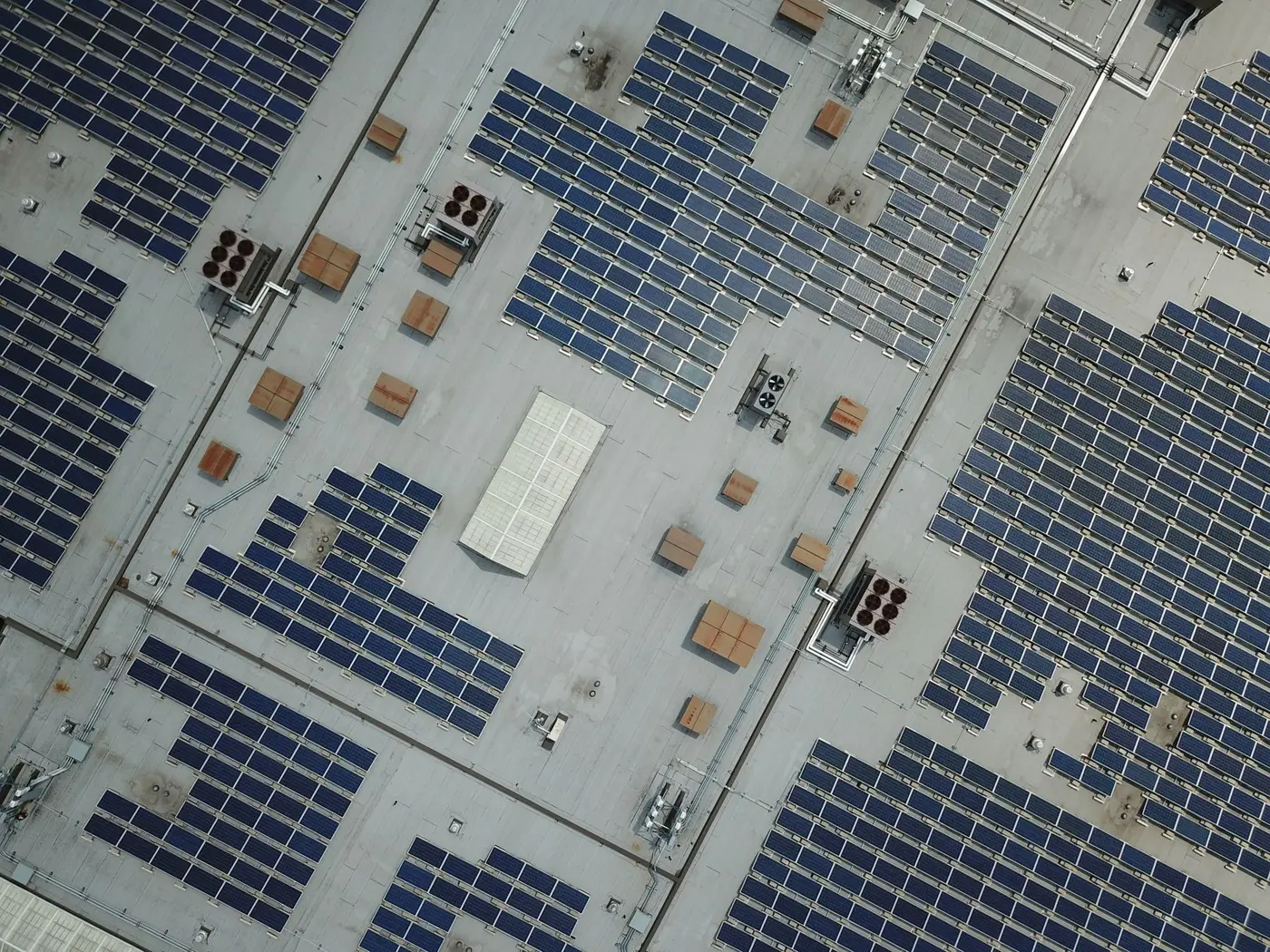
Aerial view of a large rooftop solar array across a commercial building roof
Reference image. Commercial arrays are quoted on panel count, row layout and the area that can be worked safely.

Office & Mixed-Use Buildings

Roof-mounted arrays on offices and mixed-use buildings, scheduled outside working hours wherever roof access allows it.

Retail & Storefront Properties

Panels on retail buildings and smaller commercial premises, often cleaned alongside the glass and frontage when both are being handled.

Schools & Educational Facilities

Arrays on school buildings and campus structures, planned around term dates, breaks and the site access rules already in place.

Places of Worship

Roof arrays on churches and community buildings, scheduled around services, events and volunteer availability.

Apartment & Multifamily Properties

Building-mounted arrays across apartment and multifamily properties, coordinated through the property manager or on-site staff.

Warehouses & Facilities

Larger building-mounted arrays where the roof layout, the access route and a safe working area can all be confirmed in advance.

Scope of Work

Solar Panel Systems We Clean

Rooftop, ground-mounted and larger building-mounted arrays at homes, businesses and managed properties across the Seattle area.

Rooftop Solar Panels

The most common request, on houses and commercial buildings alike.

  • Pitched residential roofs and low-slope commercial roofs
  • Garage, carport and detached-structure mounts
  • Access route, roof pitch and panel position confirmed first
  • Work planned so nobody needs to walk across the panels

Ground-Mounted Solar Panels

Yard and frame-mounted arrays that can be reached safely from the ground.

  • Residential ground mounts and accessible garden arrays
  • Panels on frames at a workshop, barn or outbuilding
  • Usually the most straightforward layout to clean thoroughly
  • Surrounding vegetation and footing checked before we start

Commercial Solar Arrays

Larger building-mounted systems on commercial and managed properties.

  • Multi-row arrays on commercial and institutional roofs
  • Scope agreed by panel count, rows and safely reachable area
  • Scheduling worked around tenants, staff and operating hours
  • Site induction and existing roof access rules respected

Final scope always depends on access, panel condition, property layout and safety considerations. Two properties with the same number of panels can end up with genuinely different quotes, and occasionally with different answers about how much of a system can be cleaned at all.

Not sure whether your array needs cleaning yet?

Send a photo from the ground, roughly how many panels you have and your property location. We will tell you honestly whether it is worth booking now or waiting until after the next season.

Included

What We Remove From Solar Panel Surfaces

Everything below is ordinary exterior soiling on panel glass, frames and the debris caught around them. It is what accumulates on a Seattle roof over a season, and it is what a panel clean is actually for.

  • Dust and airborne dirt film
  • Seasonal pollen
  • Bird droppings on panel glass
  • Leaves and loose plant matter
  • Fir, cedar and pine needles
  • Tree debris caught at panel edges
  • General outdoor grime
  • Cobwebs on frames and hardware
  • Dried water spotting and residue
  • Sap spotting and organic marks
  • Seasonal debris along panel rails
  • Light surface buildup on frames

What panel cleaning does not cover

Solar panel cleaning addresses surface buildup. It is not an inspection, a repair or a performance service, and treating it as one would be misleading. Electrical faults, damaged panels, mounting problems and system performance issues should be handled by a qualified solar technician.

  • Damaged, cracked or delaminated panel glass
  • Wiring, connectors, inverters and electrical faults
  • Mounting hardware repairs or re-seating an array
  • Monitoring, output testing and system diagnostics
  • Roof repairs, flashing work and established roof moss treatment

If something on your array looks like damage rather than dirt, we will point it out and leave it to a solar specialist rather than clean around it and say nothing.

Our Method

How We Clean Solar Panels

A panel is not a window and it is not a driveway. It is a sealed assembly of glass, frame, gaskets and wiring sitting somewhere awkward to reach, so the sequence matters more than the equipment does. What follows is how the work actually runs, from the first look at the property to the point where the scope is signed off.

About pressure washing and panels

Pressure washing is a separate exterior cleaning service we offer for durable ground surfaces such as driveways, concrete and walkways. High-pressure washing is not treated as the default approach for panel glass. Panels need a cleaning approach suited to the panel surface, the condition of the system and the manufacturer considerations that apply to it. If you want both done, they are quoted together and carried out differently.

Pressure washing services
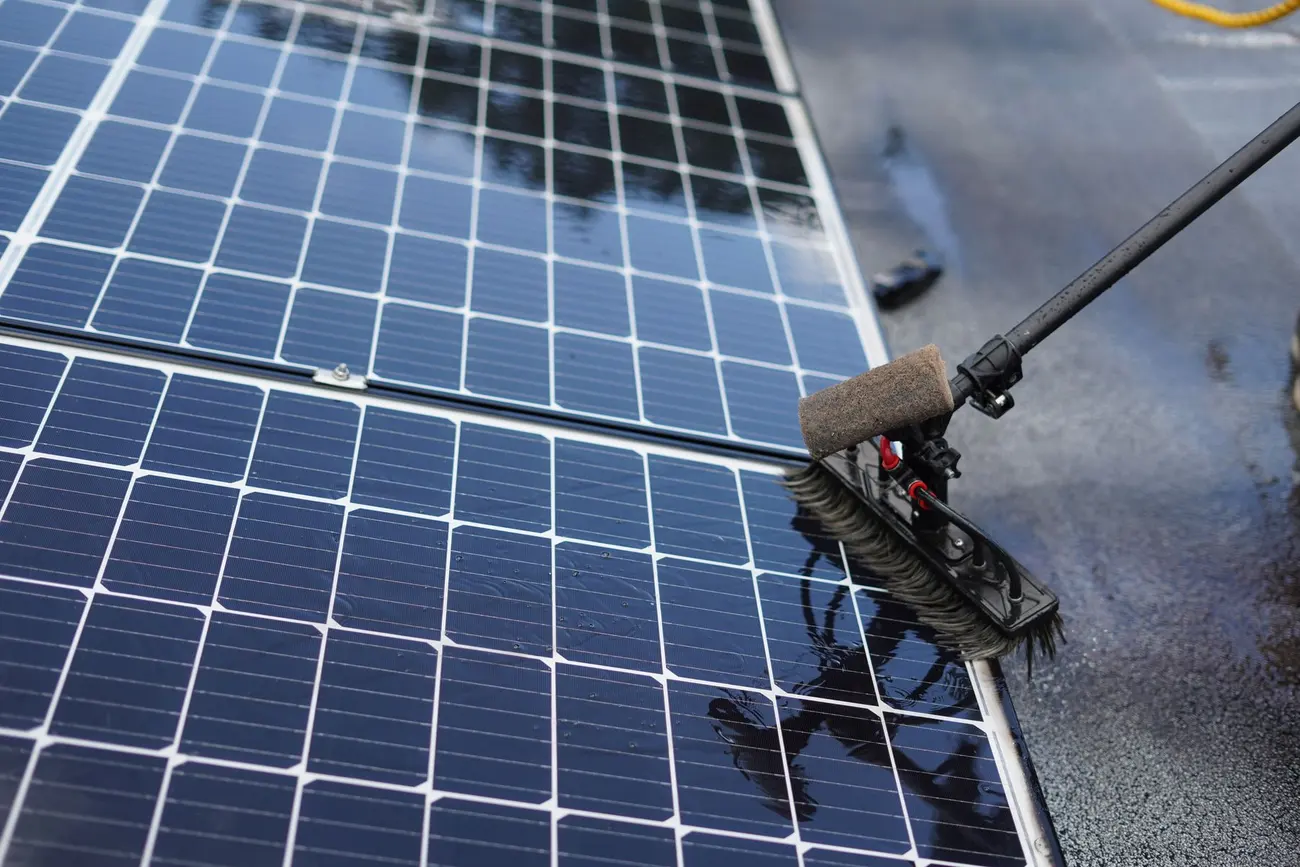
A soft brush head being worked across wet solar panel glass during cleaning
Reference image. Panel surfaces are worked rather than blasted, with the method chosen for the glass and its condition.
  1. Step 1

    Property & Panel Assessment

    We confirm the number of panels, where the system sits, how it can be reached, what condition the glass and frames are in, and what has actually built up. Anything that looks like damage rather than soiling gets flagged to you rather than cleaned around quietly.

  2. Step 2

    Cleaning Plan & Access Decision

    The approach is chosen for that specific system: what can be reached from the ground, what needs roof access, where a technician can stand, and which areas are not safe to attempt. If part of an array cannot be cleaned safely, you hear that before the visit, not after it.

  3. Step 3

    Surface Cleaning

    Loose debris comes off the glass and the frame edges first, then the surface film is loosened and lifted with panel-appropriate methods selected for the condition of the glass. High-pressure washing is not treated as the default approach for panel surfaces.

  4. Step 4

    Detail Attention

    Bird droppings, sap spotting and dried residue need working rather than rinsing. These get individual attention where the panel is reachable and the surface allows it, along with debris packed into the bottom edge and along frame rails.

  5. Step 5

    Final Visual Check

    Accessible panel surfaces are looked over in the light, the surrounding roof or ground area is cleared of anything we brought down, and anything worth telling you about, such as heavy debris at the roof edge, gets mentioned.

  6. Step 6

    Completion & Handover

    We confirm the agreed scope has been completed, note anything that was not reachable, and, where you want it, set a rough timeframe for coming back before the next pollen or leaf season.

Why Us

Why Choose Cleaning From The Heart LLC for Solar Panel Cleaning?

A locally owned, family-operated Seattle cleaning company that treats panel cleaning as part of maintaining a property's exterior, not as a specialty upsell.

Local Seattle Service

A Seattle-area cleaning company serving the city and the surrounding cities listed further down this page, not a national brand routing calls to a local subcontractor.

Residential & Commercial

Homes, businesses and managed properties are all normal work here, and both are quoted the same way: on panel count, access and condition.

Careful Surface Cleaning

The point is to remove outdoor buildup without treating panel glass like a driveway. Method is matched to the surface, and anything that is not safe to attempt is left alone and reported.

Rooftop & Ground-Mounted

Roof-mounted and accessible ground-mounted arrays, subject to what the access assessment supports at your particular property.

Flexible Scheduling

One-time cleaning, a seasonal visit after pollen or leaf drop, or a repeating schedule for a property that is already on a maintenance calendar.

Exterior Work Bundled

Panels are often quoted alongside window cleaning or pressure washing, which keeps one crew and one visit on the property instead of three.

Free Property-Specific Quote

The quote reflects your panel count, your roof and your access, not a generic per-panel figure applied to every property in the city.

Experienced Property Cleaning Team

Cleaning From The Heart LLC is locally owned and family-operated, built on more than 30 years of hands-on cleaning experience across homes, offices, schools and commercial properties.

Scheduling

How Often Should Solar Panels Be Cleaned in Seattle?

There is no universal answer here, and we would rather say that than invent a schedule. Some property owners book annually, usually in late spring once pollen has finished. Others go twice a year, after pollen and again after leaf drop. Plenty simply call when the panels start looking dull or when droppings have obviously been sitting there a while. All three are reasonable.

What tips a property toward more frequent cleaning is almost always its surroundings rather than its system. A house under mature firs with regular bird activity on the roof will need attention more often than an exposed array on an open lot half a mile away. Panel angle matters too: steeper panels shed water and debris on their own, shallower ones hold both.

Commercial properties tend to settle into a rhythm faster, because the panels get added to an exterior maintenance calendar that already exists and the interval gets adjusted after the first couple of visits based on what actually turns up on the glass. That is the honest way to arrive at a frequency: start from the property, not from a rule.

What determines how often

  • How much tree cover sits above the array
  • Bird activity on and around the roof
  • Roof pitch and the angle the panels sit at
  • Proximity to arterials, gravel roads or building sites
  • How much pollen the property catches in spring
  • Leaf and needle drop through autumn
  • Whether the system is shaded or exposed
  • Property type and how it is used
  • How the array can be reached safely

You may want to consider cleaning when

  • Visible bird droppings are still sitting on the glass
  • A pollen film is noticeable from the ground or a window
  • Leaves and needles have collected along the panel edges
  • The panels look visibly dull or grey compared with last year
  • Nearby construction or landscaping has thrown up unusual dust
  • A seasonal exterior maintenance visit is already being planned

One-time or repeating

A single visit works for a property that has gone a few years without one, or where a house is being prepared for sale. A repeating schedule suits properties where the same conditions come back every year and where the panels are already part of a wider exterior maintenance plan.

Ask what makes sense for your property
Timing

When Is the Best Time to Clean Solar Panels in Seattle?

No single month is universally right. Weather and what is actually on the panels matter far more than a date, but these are the points in the year when it most often makes sense.

After Heavy Spring Pollen

Once the worst of the pollen has finished dropping, usually late spring, a clean removes the whole season's film at once instead of chasing it week by week.

During Drier Summer Weather

Summer gives the longest run of dry, settled days, which makes access easier to plan and is when most homeowners schedule exterior work anyway.

After Significant Tree Debris

A storm, a windy week or a nearby tree being cut back can put more on an array in two days than a quiet month does. Those are worth dealing with when they happen.

Around Fall Leaf Season

Late autumn, once leaf and needle drop has largely finished, clears debris off the panels before the long wet stretch sets in and holds it there.

Whenever Buildup Becomes Visible

The most reliable signal is simply what you can see. Visible droppings, a dulled surface or debris along the edges beat any date on a calendar.

In practice the weather decides the day rather than the calendar. Work gets planned around dry enough conditions and safe access, which in Seattle means a certain amount of flexibility on both sides. If a date has to move because a roof is not safe to work on that morning, it moves.

Pricing

How Much Does Solar Panel Cleaning Cost in Seattle?

We do not publish a flat rate, because the same panel count can be a straightforward job at one property and a genuinely difficult one at another. A twelve-panel array on a single-story ground-accessible roof and a twelve-panel array high on a steep pitch behind a chimney are not the same piece of work, and pricing either from a table would mean overcharging one of them.

What a quote is built from is listed opposite. Access and safety usually move the number more than panel count does, which is why the assessment comes first and the price comes second.

Tell us roughly how many panels you have, where they are located on the property, and your property location. We can review the scope and give you the next steps. Quotes are free and there is no obligation attached to asking.

What the quote is based on

  • Number of panels
  • Rooftop or ground-mounted
  • Building height and stories
  • Roof pitch and panel angle
  • Array layout and row spacing
  • Access and safe working area
  • Amount and type of buildup
  • Residential or commercial property
  • Scheduling and site restrictions
  • Other exterior services in the same visit

Combining panel cleaning with window cleaning or pressure washing in the same visit is quoted as one job. We do not advertise package discounts we have not set.

Our Work

Solar Panel Cleaning Results

Our photographed before-and-after work currently covers exterior surfaces, floor care and window cleaning at Seattle-area properties. Solar jobs will be added to the same gallery as they are photographed.

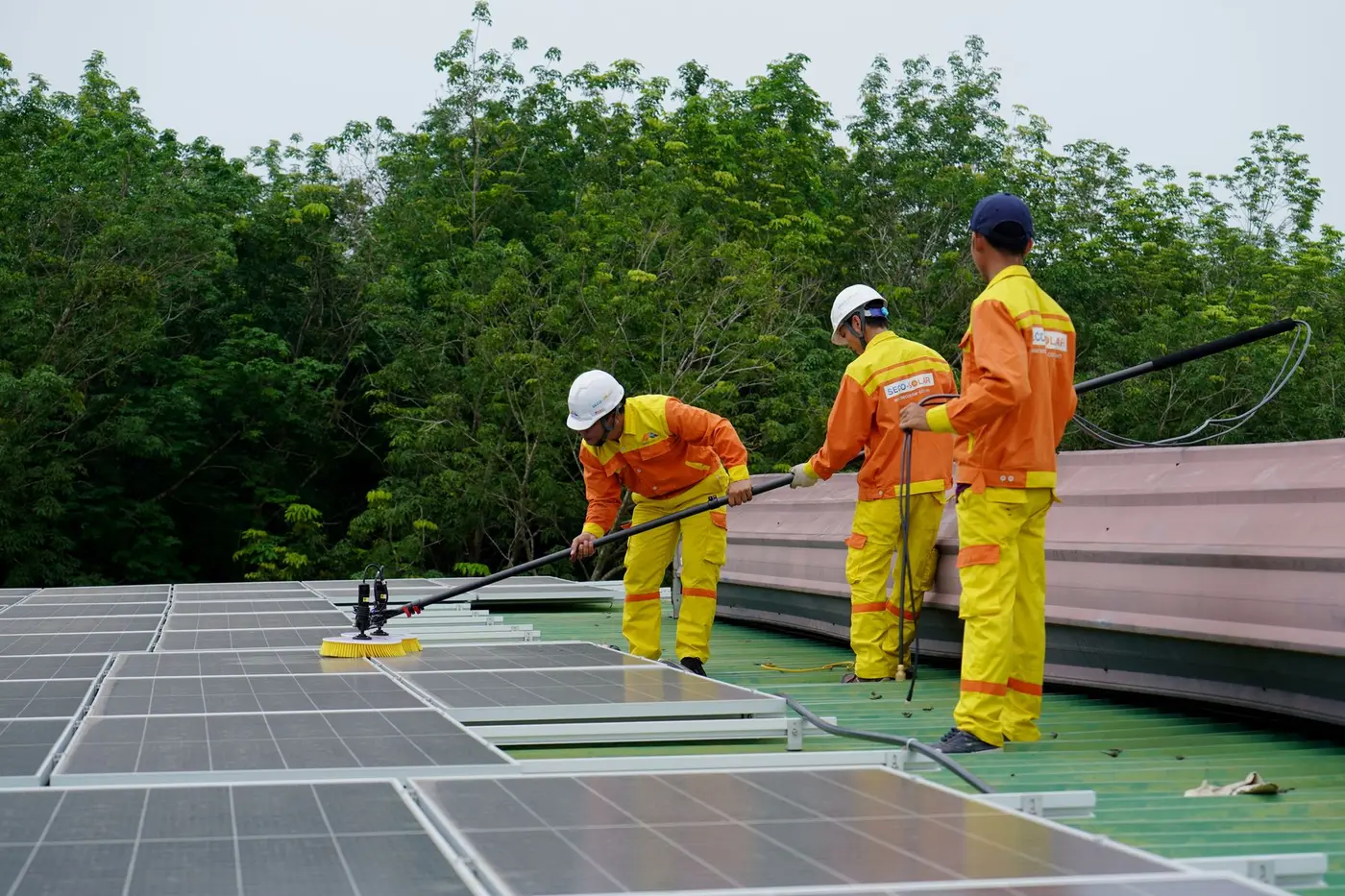
Technicians using extension poles with brush heads to clean a row of rooftop solar panels
Reference image, not a Cleaning From The Heart project. It shows the kind of pole-and-brush access commonly used where panels cannot be reached by hand.

See our real before & after work

The results gallery holds genuine photographs from Seattle-area properties: exterior surface cleaning, window cleaning, floor care and commercial work, shown before and after. Every image in it is our own. Nothing on this page is presented as a company project unless it appears there.

Our Process

How Booking Solar Panel Cleaning Works

Five steps from the first message to a completed visit, with the scope confirmed before the date is booked rather than negotiated on the roof.

  1. Step 1

    Request a Quote

    Send your property location, roughly how many panels you have, where the array sits, and how it can be reached. A photo from the ground helps more than a paragraph of description.

  2. Step 2

    Review the Scope

    We look at panel placement, visible condition, roof or ground access, and what your schedule needs to work around, then come back with the scope and the next steps.

  3. Step 3

    Confirm the Details

    Scope, timing, access arrangements and any other exterior services in the same visit are agreed before the date is booked. Nothing gets added on the day without asking.

  4. Step 4

    Complete the Cleaning

    Panel surfaces are cleaned to the agreed scope, with debris cleared from panel edges and frame rails and stubborn spotting given individual attention where it is safe to reach.

  5. Step 5

    Final Check & Handover

    Accessible panels and the surrounding work area get a final visual review, anything that could not be reached is reported, and a return timeframe is set if you want one.

Across the City

Solar Panel Cleaning Across Seattle

Conditions on a roof change noticeably from one part of the city to another, and it shows up on panel glass. Properties in the older, heavily wooded neighborhoods sit under mature conifers and deciduous street trees, so needles, leaves and sap dominate what collects on an array. Shade from the same trees keeps roofs damp longer, which is why dust sticks rather than blows off.

Closer to the arterials and denser commercial blocks, the mix shifts toward road film, brake dust and airborne grit, with construction dust added wherever a site has opened up nearby. Exposed ridges and west-facing slopes catch more weather and more wind-carried debris, while lower, more sheltered pockets hold moisture. Roof pitch and how much of the array sits in open sun then decide how much of that rain moves on its own.

None of it changes the work fundamentally. It does change how often a property is worth revisiting, and it is part of what gets discussed when a quote is put together rather than treated as background noise.

Seattle neighborhoods we work in

  • West Seattle
  • Ballard
  • Queen Anne
  • Magnolia
  • Wallingford
  • Green Lake
  • Capitol Hill
  • Beacon Hill
  • Rainier Valley
  • Columbia City
  • Northgate
  • University District

Elsewhere in the city too. If you are not sure whether your address is covered, call and we will tell you straight away.

Solar Panel Cleaning Near Seattle

Seattle is where most of this work happens, and the surrounding cities below are served from the same schedule. Panel count, access and safe working area are all confirmed when we quote, so if your property sits toward the edge of these areas, a quick call will settle whether we can cover it properly.

  • Seattle
  • Renton
  • Bellevue
  • Kent
  • Everett
  • Tukwila
  • Shoreline
  • Federal Way
  • Rainier
  • North Lynnwood
  • Mill Creek
  • Kirkland
  • Tacoma
  • Bothell

Serving Seattle, Renton, Bellevue, Kent, Everett & Surrounding Areas. Business hours Mon-Sat: 7 AM - 7 PM.

FAQ

Solar Panel Cleaning FAQs

What homeowners, business owners and property managers ask most before booking panel cleaning in Seattle.

Question about your own system?

Send your panel count, where the array sits and a photo from the ground, and we will tell you what is realistic at your property.

Does rain clean solar panels in Seattle?

Partly. Steady rain rinses loose dust and light surface particles off panel glass, which is why panels here rarely look as bad as they would in a dry, dusty climate. What rain does not reliably remove is anything that has bonded to the surface: bird droppings, tree sap, sticky pollen, dried mineral spotting and organic residue. Rain also carries its own dirt, and where water sits on a low-pitch panel and evaporates rather than running off, it can leave spotting behind rather than take it away.

How often should solar panels be cleaned in Seattle?

There is no single correct interval, and any company quoting one before seeing your property is guessing. Some owners book annually, some twice a year, and some simply call when buildup becomes visible. What actually drives it is tree cover, bird activity, panel angle, how exposed the property is, and how much pollen and leaf drop it catches. A shaded house under mature firs and an open array on a commercial roof are genuinely different situations.

Can dirty solar panels affect energy production?

Heavy buildup physically sits between sunlight and the panel surface, so keeping glass clear means dirt is not unnecessarily obstructing it. We will not put a percentage on the difference, because actual electricity production depends on far more than surface cleanliness: system design, panel orientation, shading, weather, seasonal daylight and equipment condition all matter. If output has dropped noticeably and the panels are not visibly dirty, that is a question for a qualified solar technician rather than a cleaning company.

Can you pressure wash solar panels?

High-pressure washing is not treated as the default method for panel glass. Panels are a sealed assembly of glass, frame, gaskets and wiring, and forcing water at pressure into seals and junctions is not an appropriate way to remove surface dirt. Pressure washing is offered here as a separate exterior service for durable ground surfaces such as driveways, concrete and walkways. Panel cleaning uses an approach suited to the panel surface, the condition of the system and the manufacturer considerations that apply to it.

Is professional solar panel cleaning safe?

It depends on doing the assessment first. Roof pitch, how the array can be reached, the condition of the glass and frames, and what the manufacturer expects all shape whether and how a system should be cleaned. Where an array or part of one cannot be reached safely, we say so rather than attempting it. That is also the honest answer to why some quotes come back covering only part of a system.

What do you use to clean solar panels?

We use panel-appropriate cleaning methods selected according to the surface condition, the type of buildup and how the system can be accessed. Loose debris comes off first, then surface film is loosened and lifted rather than blasted. High pressure is not treated as the default approach for panel glass, and nothing is applied to a system without first considering the condition of the glass, seals and frames.

Do you clean rooftop solar panels?

Yes, where access and safety allow. Rooftop arrays on houses, garages, and commercial and institutional buildings are the most common request. The access route, the roof pitch and where a technician can safely work are all confirmed during the quote, and the scope reflects what can genuinely be reached at your property.

Do you clean ground-mounted solar panels?

Yes, for accessible ground-mounted arrays. Panels on frames in a yard, at a workshop or beside an outbuilding are usually the most straightforward systems to clean thoroughly, because the whole surface can be worked from stable ground. We check the surrounding vegetation and footing before starting.

Do you provide commercial solar panel cleaning in Seattle?

Yes. Building-mounted arrays on offices, retail properties, schools, places of worship, apartment and multifamily buildings, warehouses and managed properties are all within scope, subject to roof access and a safe working area. Larger sites are quoted on panel count, row layout and reachable area, and scheduled around tenants, staff and operating hours.

How long does solar panel cleaning take?

It varies more than people expect, so we will not put a fixed figure on it before seeing the system. Panel count is only part of it: access, roof pitch, array layout, how much has built up and what the property allows on the day all change the timing. A small ground-mounted array and a multi-row commercial roof are not comparable jobs. The quote will tell you what to expect for your property.

How much does solar panel cleaning cost in Seattle?

Pricing is quoted per property rather than published as a flat rate, because the same panel count can be an easy job or a difficult one depending on access. The main factors are panel count, rooftop versus ground-mounted, building height, roof pitch, array layout, how much buildup there is, whether the property is residential or commercial, any scheduling restrictions, and whether other exterior services are being done in the same visit. Send us the details and the quote is free.

Can solar panel cleaning be combined with window cleaning?

Yes, and it is the most common pairing we see. Both are glass, both are exterior work, and both are usually reached the same way, so combining them keeps one crew and one visit on the property. Pressure washing for driveways and walkways is often added to the same booking as well. Ask for both in the same quote request and they will be scoped together.

Do you remove bird droppings and pollen from panels?

Yes. Both fall squarely within normal surface cleaning, and between them they are the reason for most of the calls we get about panels. Droppings need individual attention rather than a rinse because they bond to the glass, and pollen is dealt with as a film across the whole surface rather than spot by spot.

What areas around Seattle do you serve?

Seattle is where most of this work happens, across neighborhoods including West Seattle, Ballard, Queen Anne, Magnolia, Wallingford, Green Lake, Capitol Hill, Beacon Hill, Rainier Valley, Columbia City, Northgate and the University District. The surrounding cities we serve include Renton, Bellevue, Kent, Everett, Tukwila, Shoreline, Federal Way, Kirkland, Bothell, Mill Creek, North Lynnwood and Tacoma. If your property sits toward the edge of that, a quick call will settle it.

Solar Panel Cleaning in Seattle

Need Solar Panel Cleaning in Seattle?

Request a free quote for residential or commercial panel cleaning in Seattle and the surrounding service areas. Tell us about your property, roughly how many panels you have and where the array sits, and we will work out the appropriate scope with you.

  • Free property-specific quote
  • One-time or seasonal service
  • Access and safety assessed first
Get a Free QuoteTakes 60 seconds · No obligation
Call (206) 850-8484Mon-Sat: 7 AM - 7 PM

Residential · Commercial · Seattle & surrounding areas

Get QuoteCall Now